
Point-of-Use Workflow Support
Magnetic Machine-Side Workflow Dock
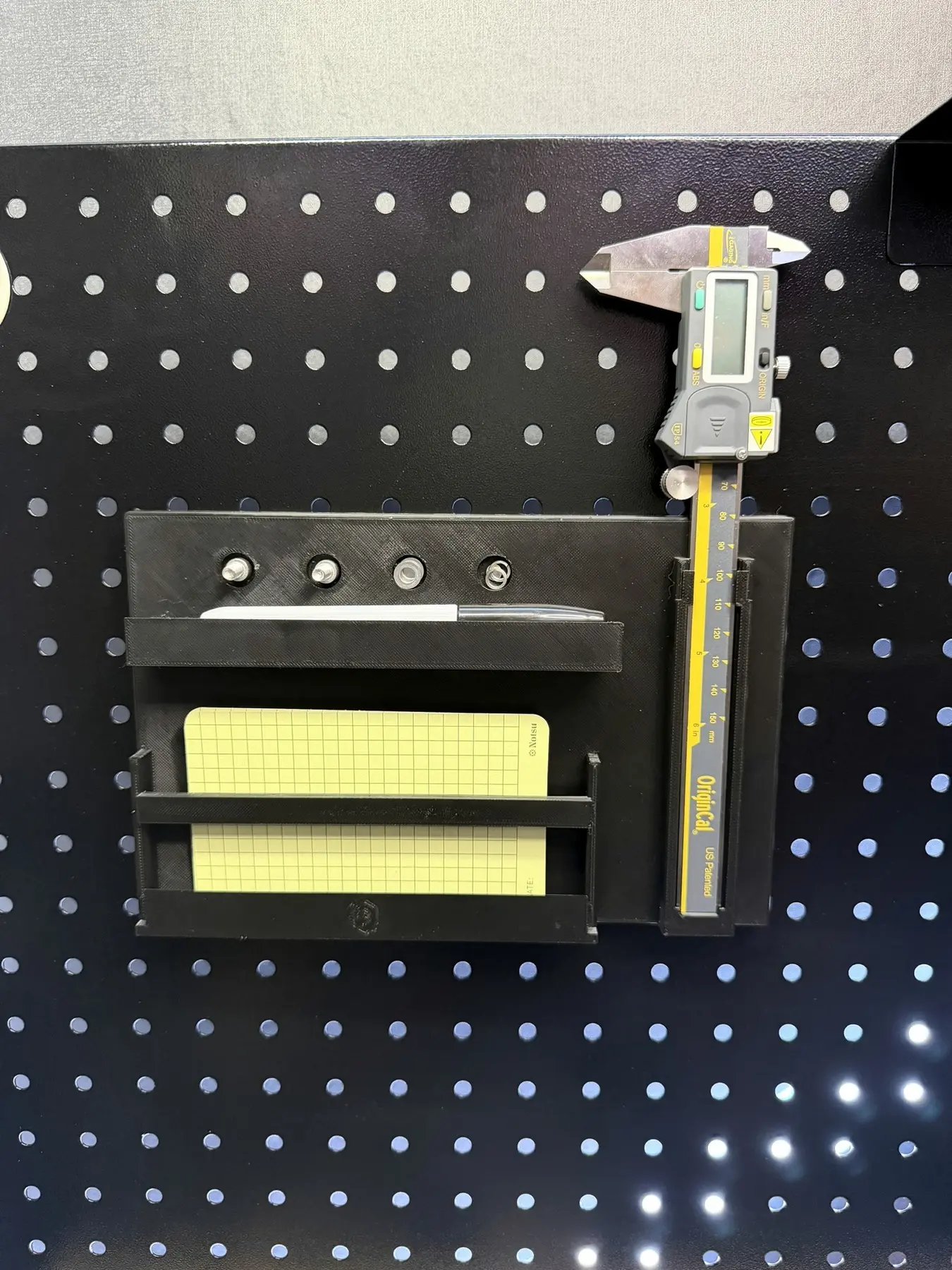
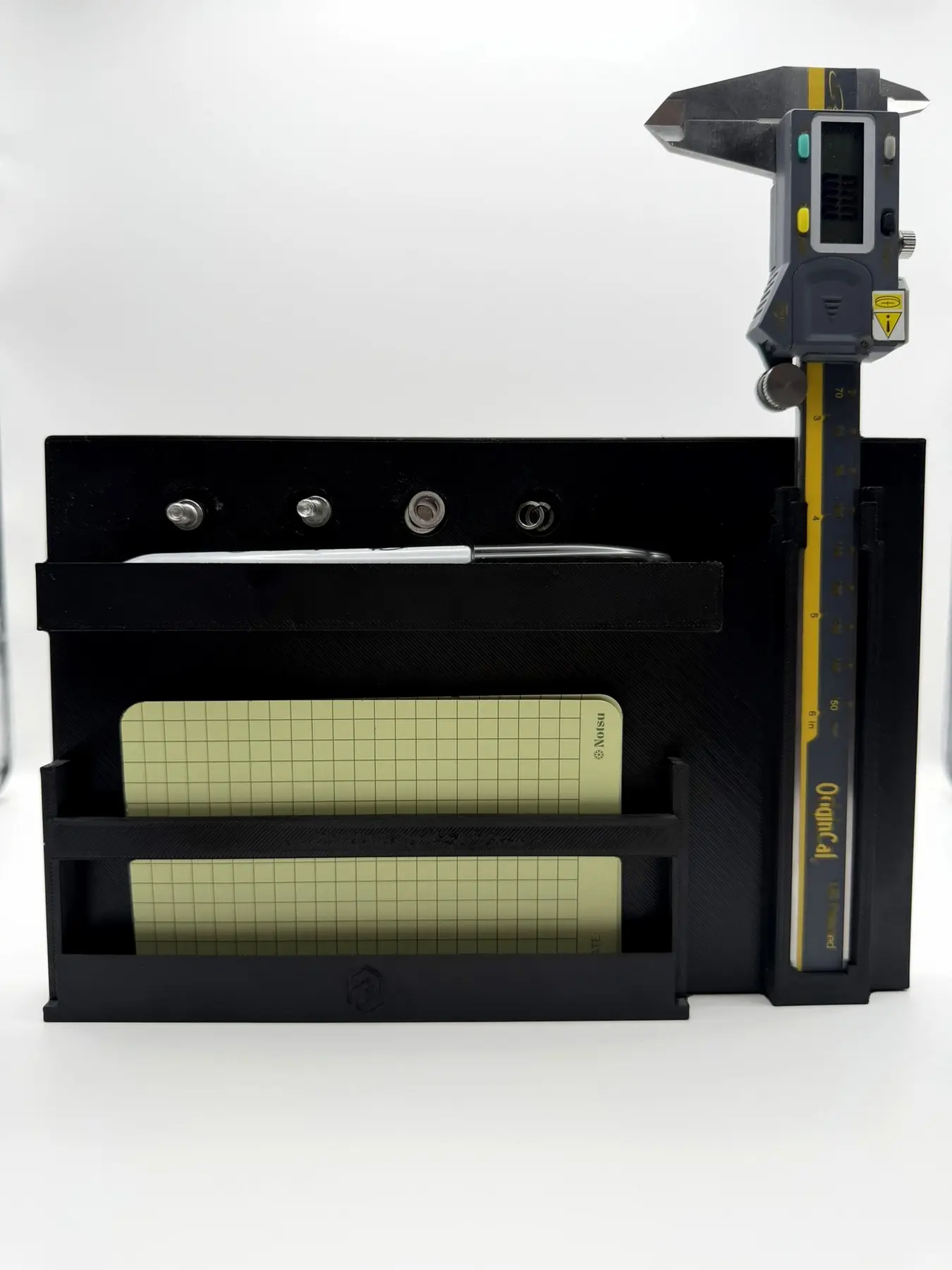
A compact PETG point-of-use dock that keeps a folded traveler or note, marker, digital caliper, and small steel fasteners staged directly at a machine-side or workbench location.
The challenge
Put the right reference items where the operator actually needs them.
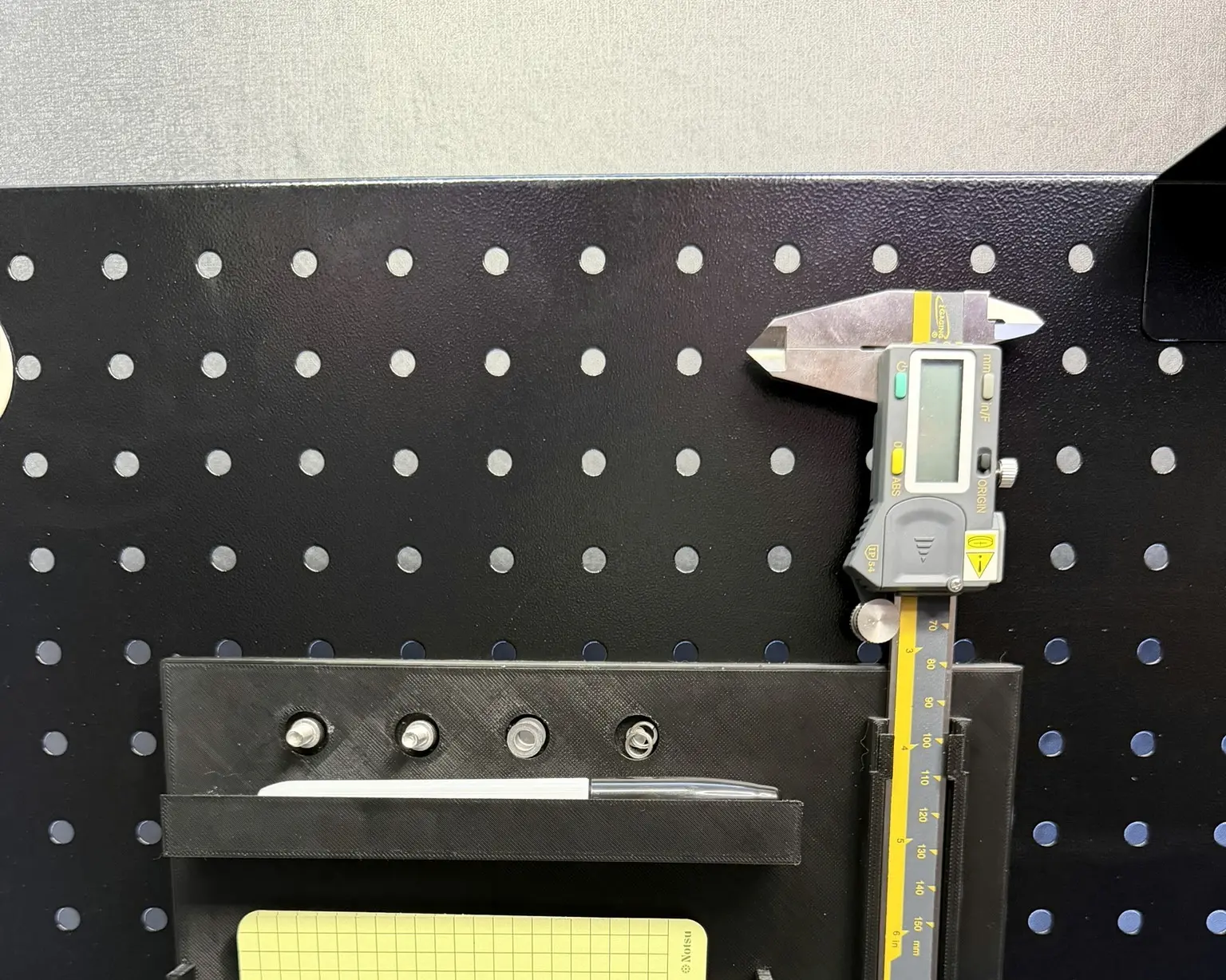
Small production and maintenance tasks often fail in unglamorous ways: the caliper is on another bench, fasteners are loose, the marker rolls away, and the traveler or note is detached from the work location.
The problem is not general storage. It is controlled point-of-use staging for the small items that support a repeatable machine-side sequence.
Controlled interfaces
Requirements locked around the real workflow.
Engineering approach
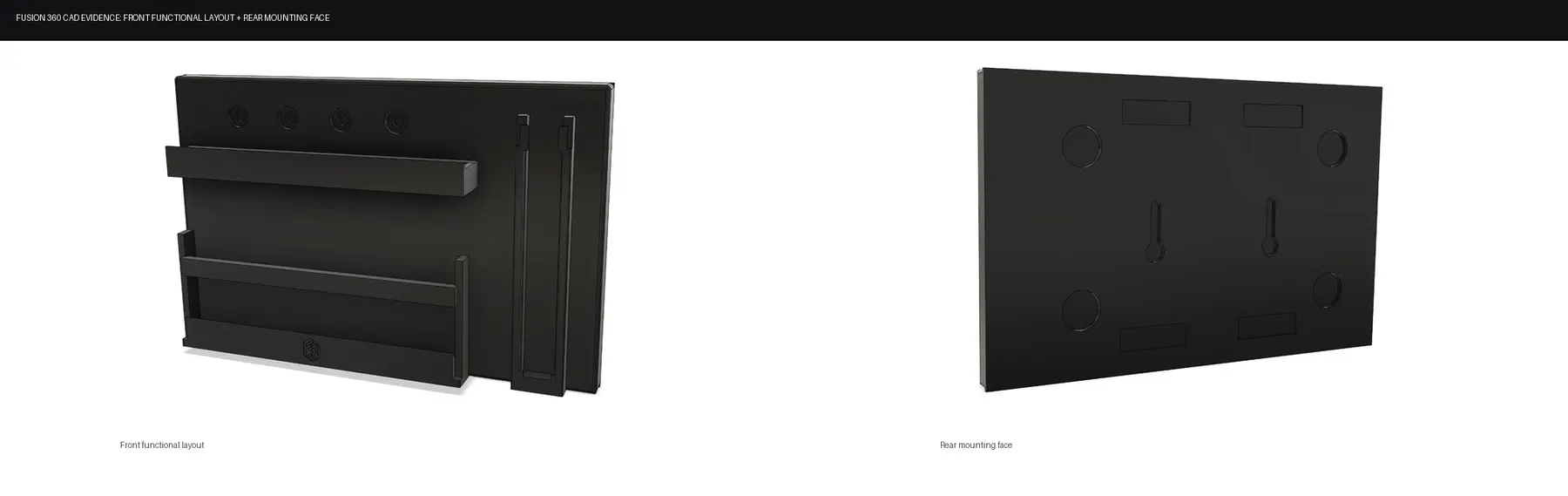
Separate job information, marking, measuring, and fastener control instead of building a generic shelf.
Document pocket
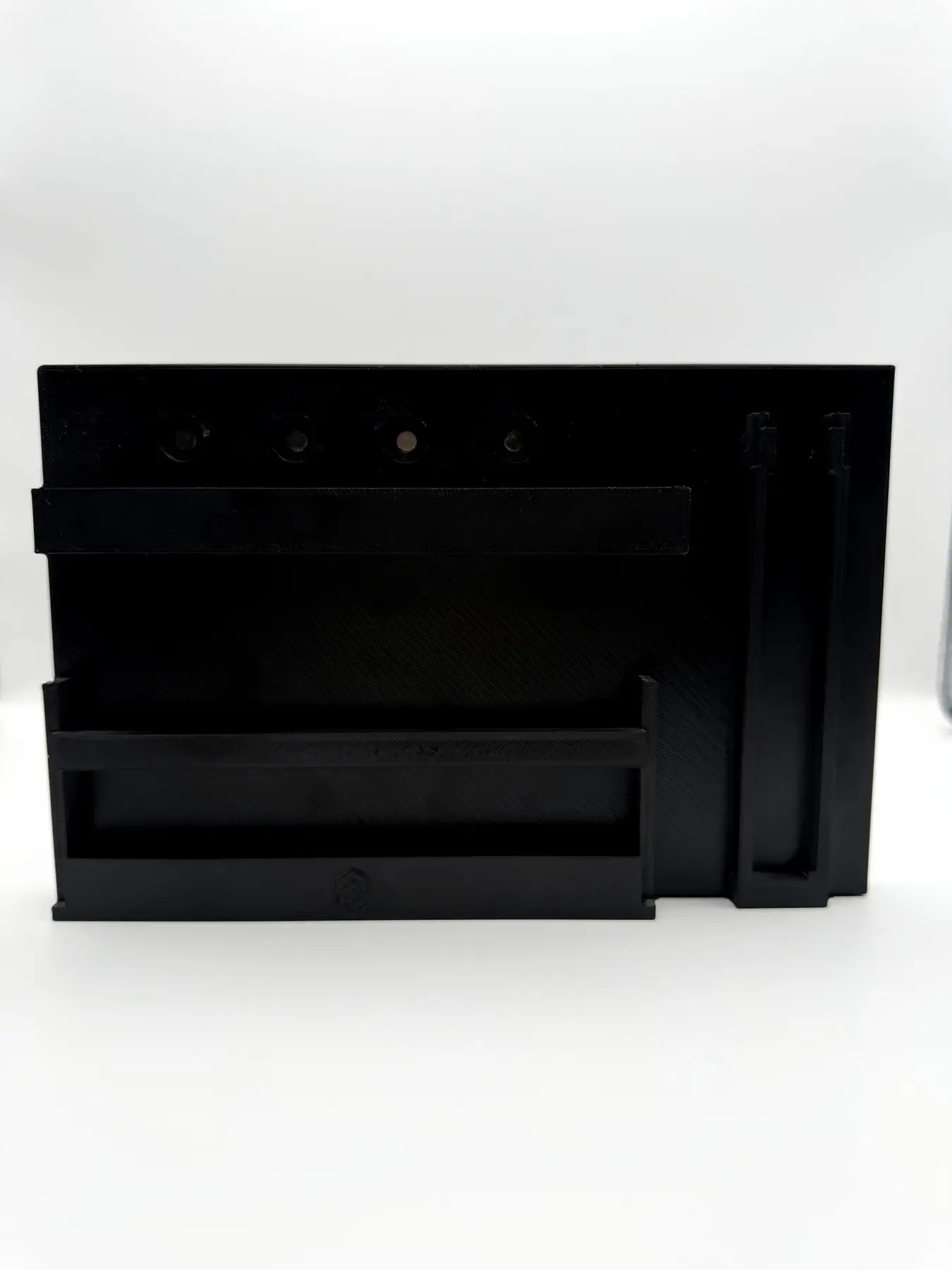
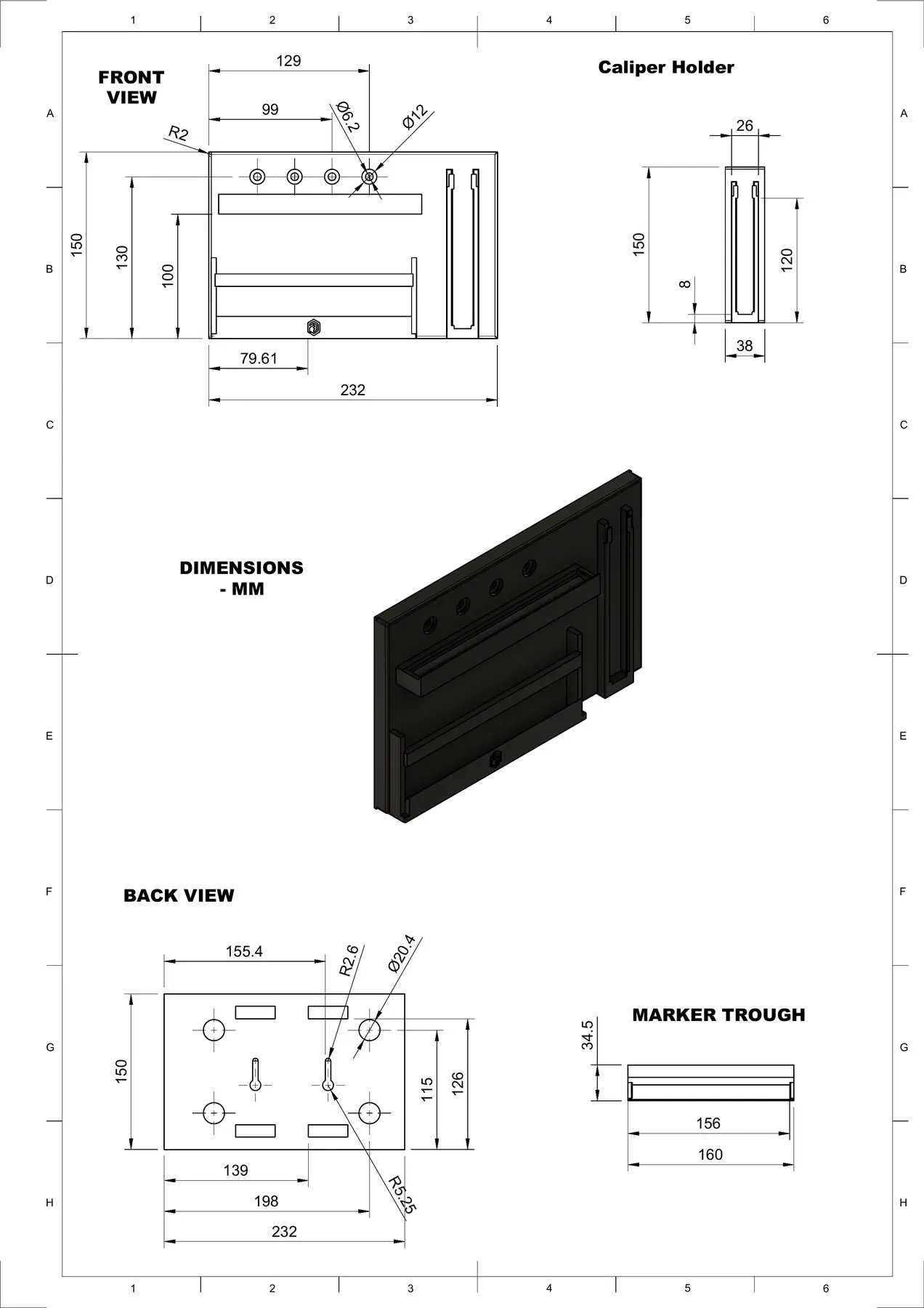
A lower front pocket keeps a folded traveler or note visible behind a compact retaining rail.
Dedicated tool zones
A marker trough and vertical caliper channel keep both tools visible without competing with paperwork.
Magnetized wells
Four small front magnets keep steel screws, springs, or other small hardware from rolling away.
Hybrid mounting
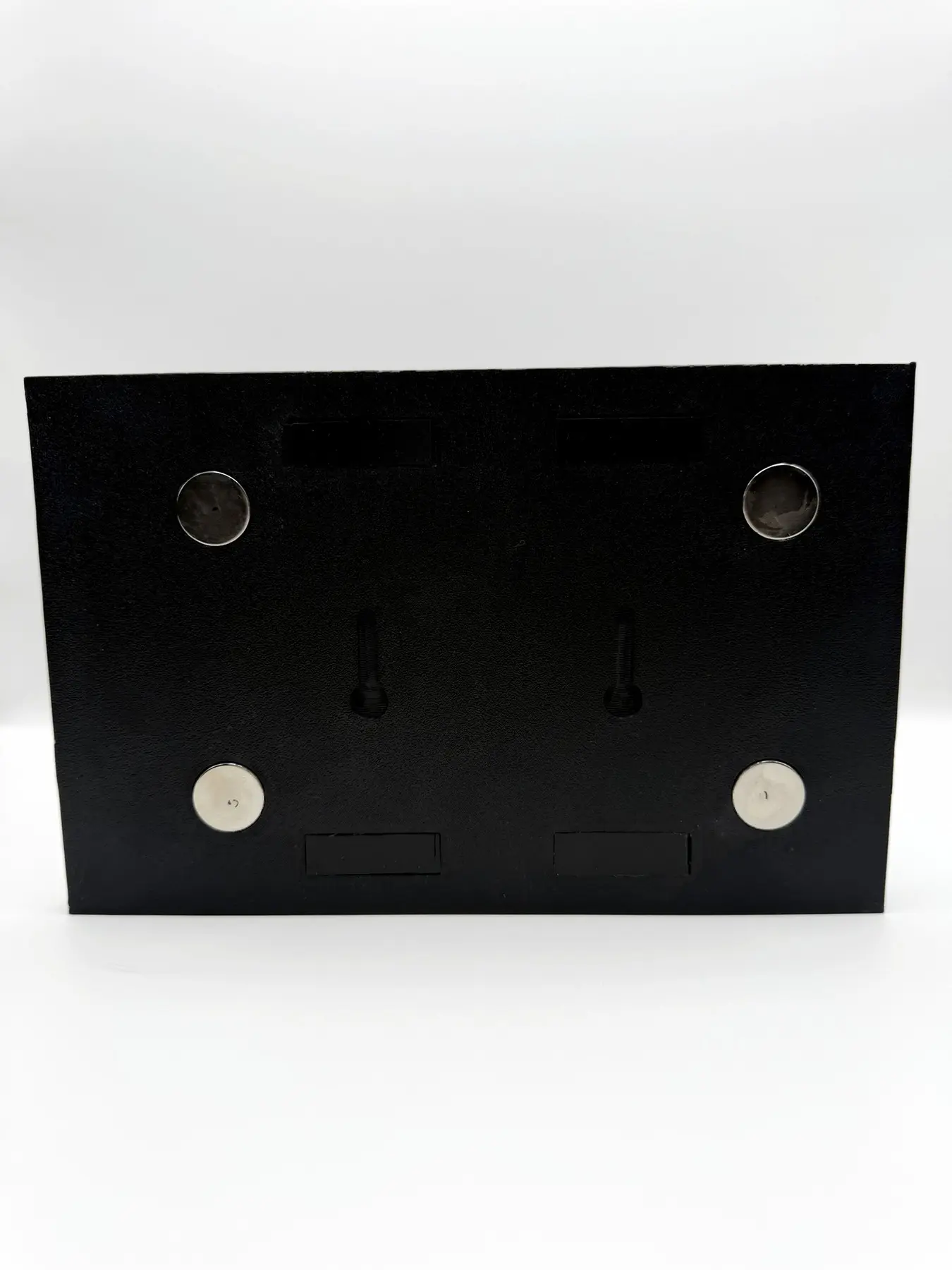
Four rear magnets support quick steel-panel placement while two screw/keyhole ports preserve a backup path. Four rear pad areas reduce hard plastic contact.
Iteration + lessons learned
Coupon discipline and a lighter full-body revision reduced risk before the final reprint.
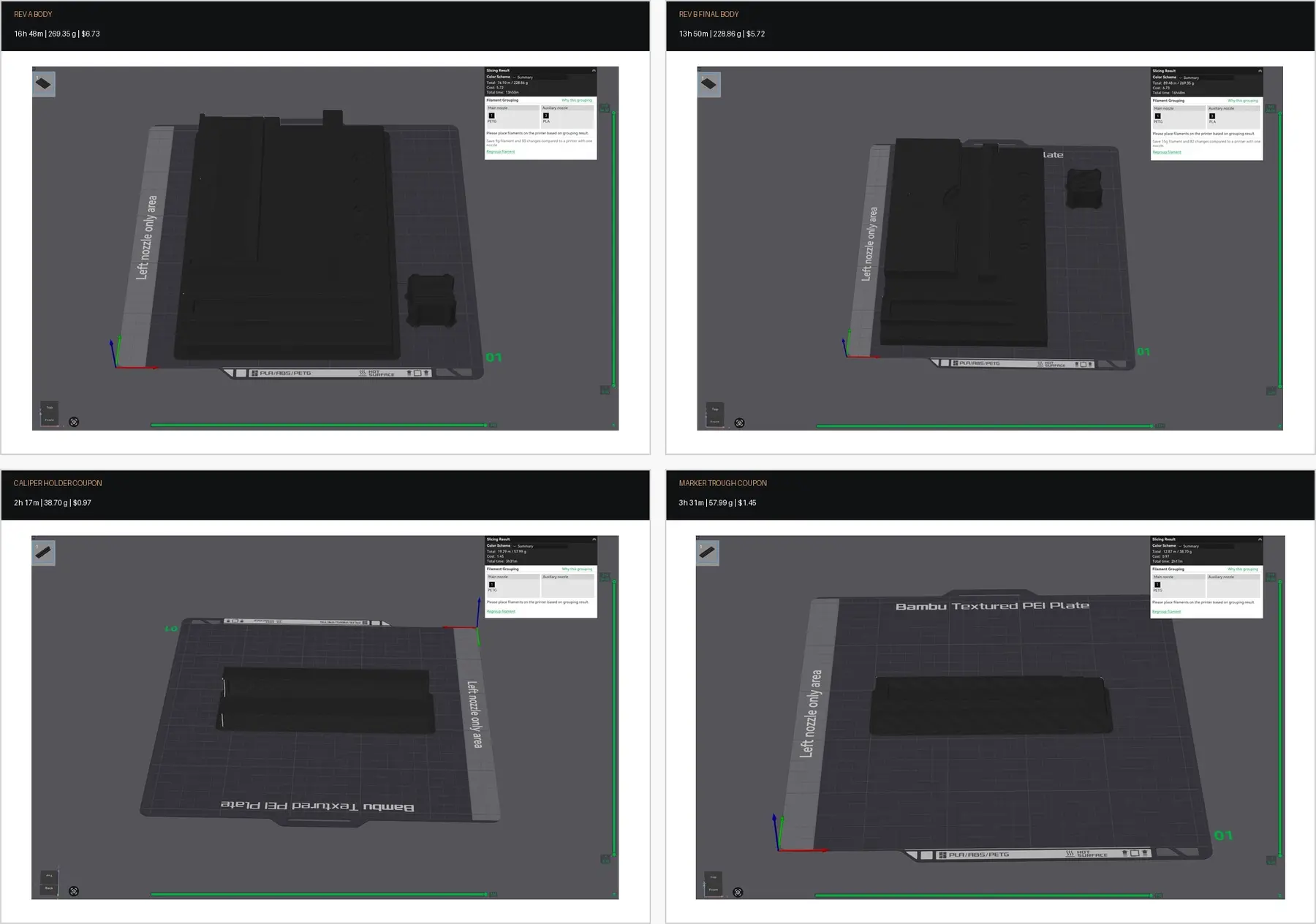
The caliper holder and marker trough were isolated as coupons before another long full-body print. The body record moved from 16h 48m and 269.35 g in Rev A to 13h 50m and 228.86 g in Rev B.
A logo clearance of only 0.396 mm caused the slicer to lose a line above the mark. Moving the logo down 2.00 mm preserved the intended front-lip geometry without disturbing the locked functional zones.
An earlier physical unit broke at the caliper-holder notches and was reprinted. Minor bridge texture from a late support issue on the successful final unit was accepted as cosmetic and documented rather than hidden as a functional change.
Manufacturing record
Final sliced data—not superseded revisions.
- Printer / plate
- Bambu Lab X2D / Textured PEI
- Body / support
- Black PETG with PLA support interface where required
- Layer / structure
- 0.16 mm; 3 walls; 18% gyroid
- Adhesion
- 6 mm brim
- Final time / mass
- 13h 50m / 228.86 g
- Slicer cost record
- $5.72 using the active profile
The slicer figure is not a fully burdened quote. It excludes labor, electricity, equipment, development, rejected prints, epoxy, magnets, and pad-stock allocation.
Validation
The physical build passed its intended portfolio checks.
Loaded magnetic hold
The final dock remained mounted with its intended contents for 24 hours.
Attachment cycles
No magnet movement after three placement and removal cycles.
Fastener wells
Small steel hardware staged visibly in all four magnetic wells.
Tool staging
Marker, note, and digital caliper were retained in the final mounted setup.
Rear hardware
Rear magnets, epoxy bonds, and silicone pads remained seated.
Screw backup
The suggested screw inserted and held; no permanent wall installation was performed.
Business value
What this build actually demonstrates.
The result is not only a printed object. It is evidence of a repeatable path from a practical problem through CAD, focused testing, revision, documented manufacturing, and a physically checked release.
- Point-of-use workflow design
- FDM-specific product architecture
- Magnet and hardware integration
- Magnetic + screw-backup mounting
- Coupon-driven long-print risk reduction
- Adhesive pad integration
- Physical hold testing
- Manufacturing recordkeeping
Evidence gallery
Physical, CAD, and dimensional context.
Scope + honest limitations
Prototype evidence without inflated claims.
- Portfolio prototype, not a sold accessory, machine guard, safety device, or load-rated mount.
- No formal pull-force, vibration, shock, cycle-life, or long-term epoxy-aging test was performed.
- No chemical, UV, oil/coolant, heat-aging, ESD, or environmental qualification was performed.
- The 24-hour hold test is practical portfolio evidence, not a standards-based retention rating.
Start with the problem
Do tools, notes, or small hardware keep drifting away from the station?
Send photos of the workstation, available mounting surfaces, the items that need a controlled home, approximate dimensions, environment needs, and expected quantity. The result may be a magnetic dock, screw-mounted holder, tool cradle, traveler pocket, or another point-of-use aid.